Fish & Aquatics
Fancy Goldfish
Carassius auratus
Care level
Intermediate
Lifespan
10 to 15 years
Adult size
15 to 20 cm body, larger with finnage
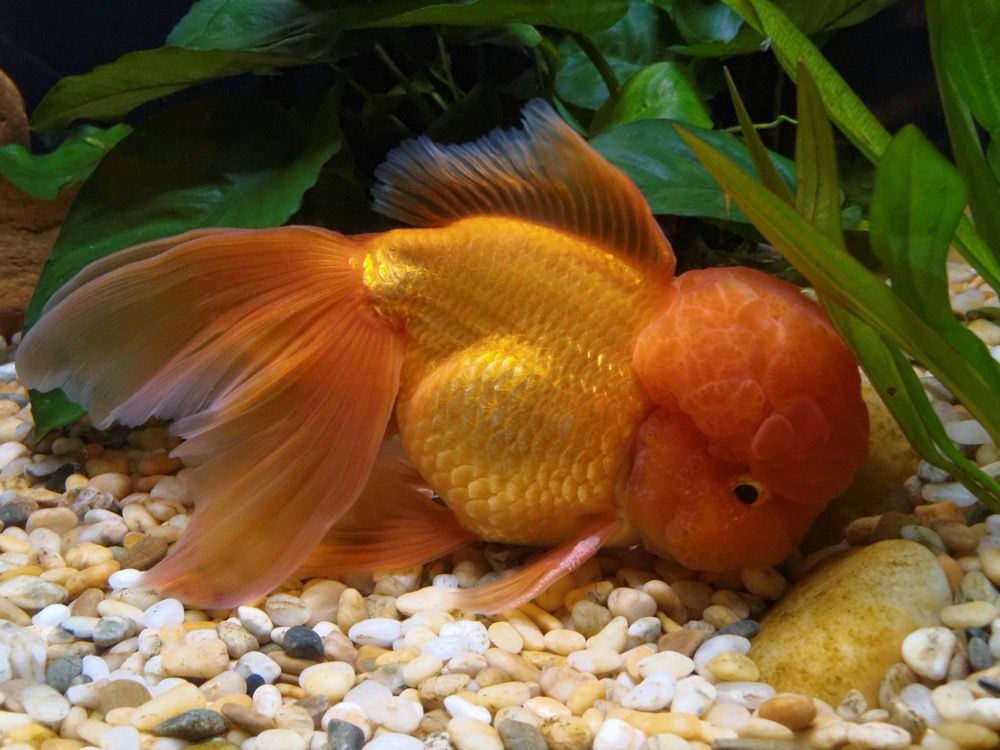
Fancy goldfish are the round-bodied, ornamental goldfish varieties such as orandas, ryukins, and fantails. They are often mistaken for easy bowl pets, but they are large, long-lived, messy fish that need a big, well-filtered, cool-water aquarium. Kept properly they are hardy, personable, and can live well over a decade.
Housing & setup
The minimum is about 75 litres (20 US gallons) for the first fancy goldfish, adding roughly 40 to 45 litres for each additional fish, and a bowl is completely unsuitable. Choose a wide tank with plenty of surface area rather than a tall narrow one, and use over-rated, powerful filtration because goldfish are heavy waste producers. Decorate with smooth rounded ornaments and hardy or artificial plants, since goldfish dig, uproot, and nibble greenery. A lid or lower water line reduces splashing and evaporation.
Diet & feeding
Feed a sinking pellet or gel food as the staple to reduce the air-gulping that causes buoyancy and swim bladder trouble, and pre-soak any floating food. Supplement with blanched vegetables such as deshelled peas, which also help relieve constipation. Give two small meals a day rather than one large one, and never overfeed, as goldfish will beg endlessly and pollute the water.
Temperature, light & environment
Fancy goldfish are cool-water fish that do best at 18 to 22 C and usually need no heater in a temperate room, and they become stressed above about 24 C. Aim for pH 7.0 to 8.4 and moderately hard water. The tank must be fully cycled with ammonia at 0 and nitrite at 0 and nitrate kept low, which is demanding given their heavy bioload. Always dechlorinate tap water, and change 25 to 40 percent weekly to stay ahead of their waste.
Company & handling
Goldfish are social and enjoy the company of other fancy goldfish of a similar slow-swimming body shape. Do not mix them with fast single-tail or common goldfish, which outcompete them for food, and do not house them with tropical community fish that need warm water. Keep numbers matched to tank volume to avoid overcrowding.
Enrichment & exercise
Provide smooth rounded decor, sand or smooth gravel they can forage and sift through, and gentle current. Sinking food scattered for foraging, safe caves, and hardy plants like anubias give them things to explore.
Common health problems
Swim bladder disorder
Signs: Floating, sinking, tilting, or swimming upside down, often after eating.
Prevention: Feed sinking or pre-soaked food, avoid overfeeding, offer peas, and keep water clean.
Ich (white spot)
Signs: White salt-like spots on body and fins, flashing against surfaces.
Prevention: Quarantine new fish, avoid chilling, and maintain clean stable water.
Fin rot
Signs: Frayed, receding, or reddened fins.
Prevention: Keep ammonia and nitrite at 0, do regular water changes, and reduce crowding.
Ammonia poisoning (new tank syndrome)
Signs: Gasping at the surface, red or inflamed gills, lethargy, clamped fins.
Prevention: Fully cycle the tank before stocking, avoid overstocking, and test water regularly.
See a vet urgently if...
- !Floating, sinking, or swimming upside down persistently
- !Gasping at the surface or red inflamed gills
- !Body swelling with scales raised like a pinecone (dropsy)
- !White spots, red streaks, or ulcers on the body
- !Refusing food combined with sitting listlessly on the bottom
In Macau
Dechlorinate Macau tap water before every water change. Summer heat is a real risk because fancies are stressed above 24 to 25 C, so use a fan, air conditioning, or an aquarium chiller to keep them cool. Goldfish are sold cheaply in Macau markets but need large tanks to do well, and ornamental goldfish and koi ponds are popular in local gardens and courtyards.
Goldfish have good colour vision and memory, can be trained to swim through hoops or push levers for food, and often learn to recognise the person who feeds them.
Questions about your exotic pet?
Our team sees small mammals, birds, reptiles and fish. Book a wellness check or a species consult.
Book an exotic consultRelated care sheets
General guidance reviewed by the Royal Veterinary Center team. Not a substitute for a veterinary examination. Always confirm species-specific and legal requirements for Macau.