Fish & Aquatics
Mystery Snail
Pomacea diffusa
Care level
Beginner
Lifespan
1 to 2 years
Adult size
4 to 5 cm shell
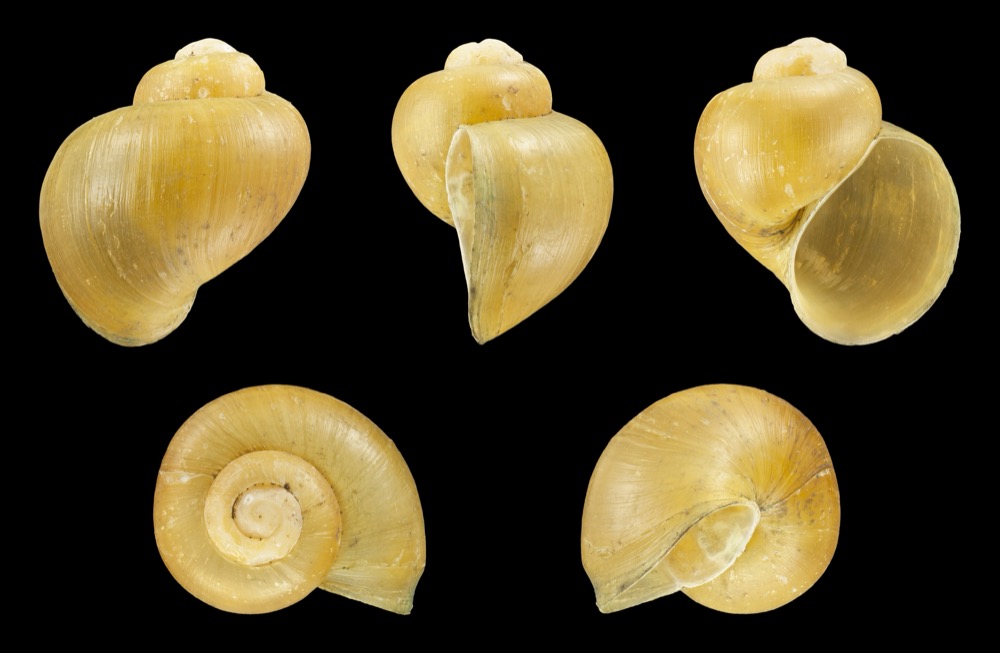
Mystery snails are peaceful, golf-ball-sized freshwater snails that come in cheerful colours like gold, blue, and ivory. They are entertaining scavengers that graze algae and leftover food without eating healthy live plants. Often sold as Pomacea bridgesii, the hobby species is more correctly Pomacea diffusa, and they make hardy, low-effort additions to a community tank.
Housing & setup
One or two snails suit a minimum of about 20 litres, with 40 litres or more for a small group. A tight-fitting lid is essential, along with a 2 to 4 cm air gap between the water surface and the lid, because they breathe air at the surface and are notorious for climbing out. Filter the tank and plant it freely, since they leave healthy live plants alone.
Diet & feeding
Mystery snails are omnivorous scavengers that eat algae, biofilm, and leftover food, but they should not be relied on to survive on scraps alone. Offer blanched vegetables such as zucchini or spinach, sinking algae wafers, and calcium-rich foods to support shell growth. Overfeeding fouls the water, so feed modest amounts.
Temperature, light & environment
Keep the water at 20 to 28 C with pH 7.0 to 8.0 and moderately hard, calcium-rich water, because soft or acidic water erodes and pits their shells. Provide extra calcium via cuttlebone or a mineral supplement to keep shells smooth and strong. The tank must be cycled with ammonia at 0 and nitrite at 0 and nitrate low. Dechlorinate tap water with a copper-free conditioner, as snails are invertebrates and sensitive to copper, and change about 25 percent weekly.
Company & handling
Mystery snails are peaceful and can live alone or in groups, and they make excellent companions for community fish and shrimp. Avoid snail-eating tankmates such as loaches, pufferfish, and some cichlids, which will harass or kill them.
Enrichment & exercise
Surfaces to graze, driftwood, smooth rocks, and plants give them plenty to explore, and they clearly enjoy climbing the glass and gliding back down. A calcium source doubles as enrichment and shell care.
Common health problems
Shell erosion and pitting
Signs: White chalky patches, pits, or a thinning, flaking shell.
Prevention: Provide hard, calcium-rich water with a pH above 7, and add cuttlebone or a mineral supplement.
Cracked shell
Signs: A visible crack or chip, often from a fall or rough handling.
Prevention: Handle gently, never drop them, and keep the shell strong with adequate calcium.
Copper poisoning
Signs: Inactivity, staying sealed up, or death after a copper medication, fertiliser, or tap water.
Prevention: Use a copper-free conditioner and never add copper-based medications to the tank.
Ammonia poisoning (new tank syndrome)
Signs: Prolonged inactivity, floating, or staying sealed shut in an uncycled tank.
Prevention: Fully cycle the tank before adding snails and keep water quality high.
See a vet urgently if...
- !White chalky patches, pits, or a flaking, thinning shell
- !Not moving for more than a day with the body hanging limp from the shell
- !A strong rotten-egg smell (a sign of a dead snail)
- !Floating at the surface and unable to seal or right itself
- !Escaped and dried out after climbing from the tank
In Macau
Dechlorinate Macau tap water with a copper-free conditioner and add calcium, such as cuttlebone, since local tap hardness varies and shells need minerals. Always keep the lid on, as they climb out. Keep the water cool in summer, and source snails from local aquarium shops.
Mystery snails breathe air through a long siphon that works like a snorkel, and females climb above the waterline to lay distinctive pink egg clutches on the glass or lid just above the surface.
Questions about your exotic pet?
Our team sees small mammals, birds, reptiles and fish. Book a wellness check or a species consult.
Book an exotic consultRelated care sheets
General guidance reviewed by the Royal Veterinary Center team. Not a substitute for a veterinary examination. Always confirm species-specific and legal requirements for Macau.