Fish & Aquatics
Molly
Poecilia sphenops
Care level
Beginner
Lifespan
3 to 5 years
Adult size
6 to 10 cm
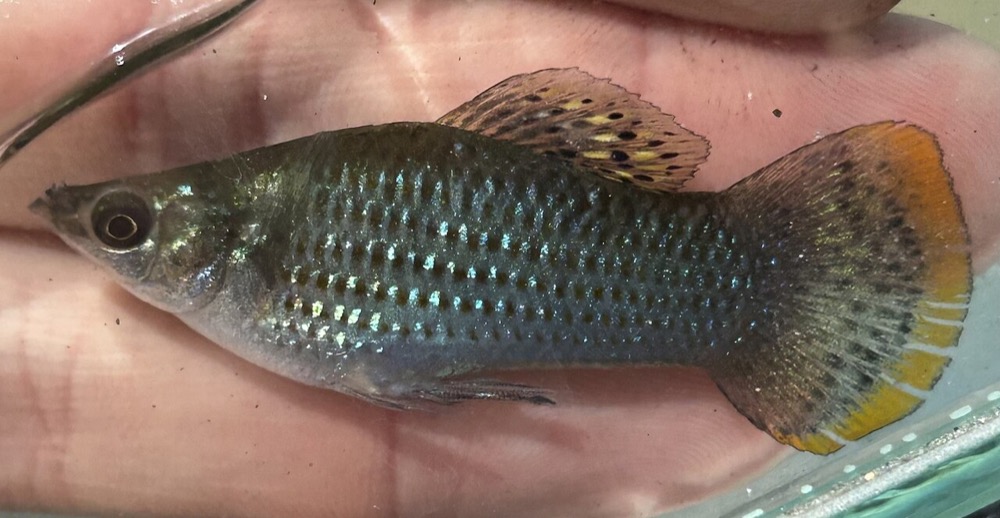
Mollies are hardy, active livebearers that come in many colours and fin types, from the common short-fin to the impressive sailfin. They are peaceful, sociable, and helpful algae grazers, but they grow larger and need firmer, harder water than their guppy cousins. Like all livebearers they breed readily, giving birth to live young.
Housing & setup
Provide a minimum of about 75 litres, as mollies are bigger and more active than guppies, with filtration and a heater. Include live plants and algae-friendly surfaces along with open swimming space, and fit a lid since they can jump. A wider tank suits their busy grazing behaviour.
Diet & feeding
Mollies are omnivores with a strong appetite for algae and plant matter, so feed a quality flake or pellet with a good vegetable or spirulina component, plus blanched vegetables and occasional frozen foods. Offer small feeds once or twice a day. Overfeeding pollutes the water, so let them graze algae as part of their diet.
Temperature, light & environment
Keep the water warm at 24 to 28 C, hard, and alkaline at pH 7.5 to 8.5, because mollies need mineral-rich water and suffer in soft acidic conditions. The tank must be cycled with ammonia at 0 and nitrite at 0 and nitrate low. Dechlorinate tap water and change about 25 percent weekly. Poor water quality or soft water is a common trigger of the shimmies.
Company & handling
Mollies are social livebearers best kept in groups with more females than males to reduce harassment. They are peaceful community fish that mix well with other hard-water species, and they breed prolifically, so plan for regular fry.
Enrichment & exercise
Plants, algae-covered surfaces to graze, driftwood, and open swimming areas keep mollies busy. Gentle to moderate flow and a naturally planted layout suit their grazing and cruising habits.
Common health problems
Ich (white spot)
Signs: White spots on body and fins, flashing, clamped fins.
Prevention: Quarantine new fish, keep temperature stable, and maintain clean water.
Shimmies (livebearer disease)
Signs: Rocking or shimmying in place without moving forward, often from soft water or poor quality.
Prevention: Provide hard mineral-rich water, keep parameters stable, and maintain excellent water quality.
Fin rot
Signs: Ragged or eroding fins.
Prevention: Keep water pristine and cycled and avoid overcrowding and stress.
Velvet
Signs: Fine gold or rusty dust on the skin, lethargy, rubbing.
Prevention: Quarantine newcomers and keep water warm, clean, and stable.
See a vet urgently if...
- !Rocking or shimmying on the spot without swimming forward
- !Fins clamped and body held stiffly
- !Gasping at the surface
- !White spots or a gold dusty sheen appearing
- !Refusing food or a swollen bloated belly
In Macau
Dechlorinate Macau tap water before use, and provide hard, mineralised water, adding minerals if your local supply is soft. Mollies are widely available in Macau shops and are hardy for beginners. Watch summer temperatures so the tank does not overheat.
Mollies are unusually adaptable livebearers that thrive in hard water and can even be acclimatised to brackish or full marine conditions, and their constant algae grazing makes them helpful tank cleaners.
Questions about your exotic pet?
Our team sees small mammals, birds, reptiles and fish. Book a wellness check or a species consult.
Book an exotic consultRelated care sheets
General guidance reviewed by the Royal Veterinary Center team. Not a substitute for a veterinary examination. Always confirm species-specific and legal requirements for Macau.