Fish & Aquatics
Harlequin Rasbora
Trigonostigma heteromorpha
Care level
Beginner
Lifespan
5 to 6 years
Adult size
4 to 5 cm
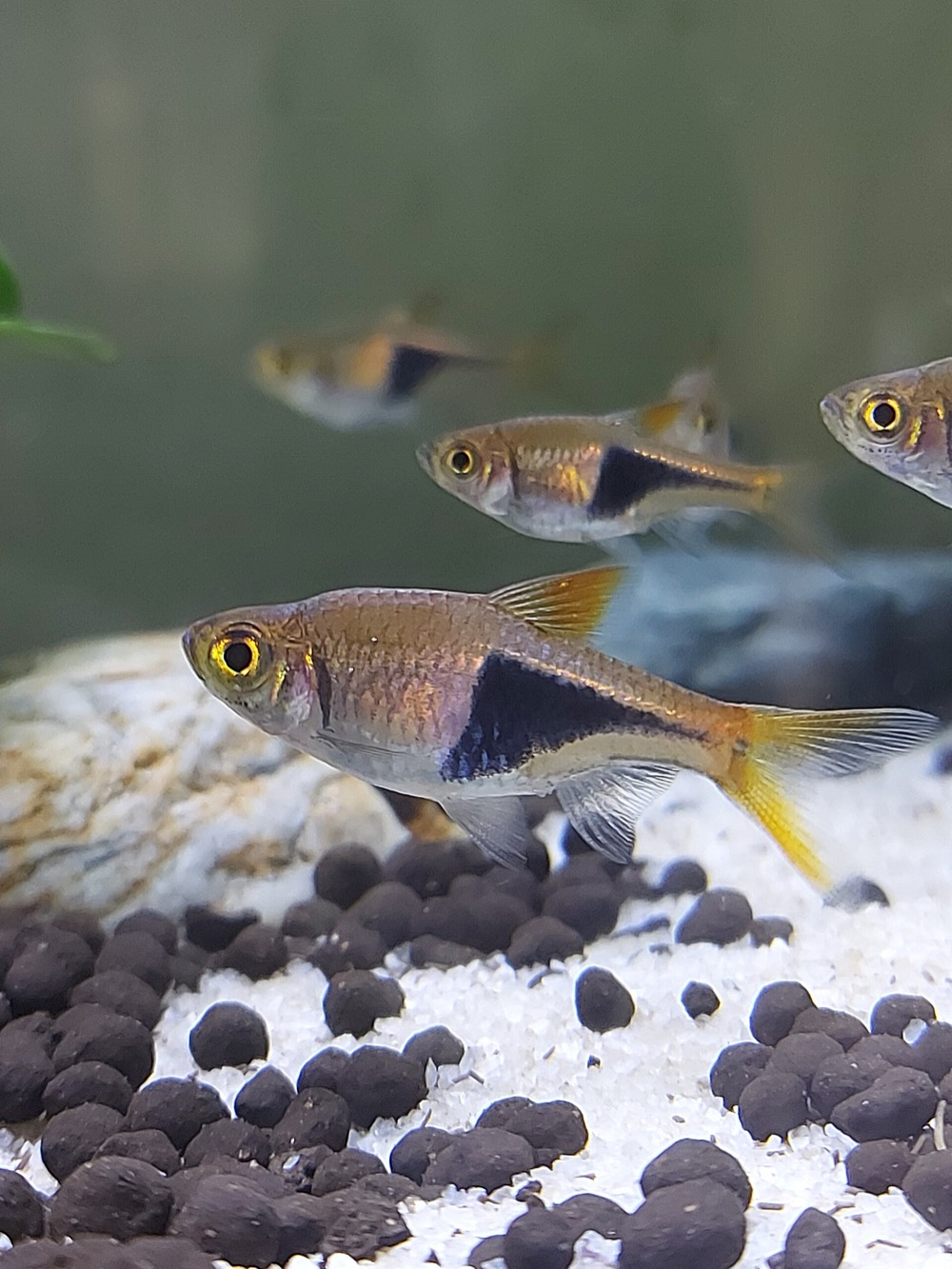
Harlequin rasboras are small, peaceful schooling fish from the soft, tannin stained streams of Southeast Asia, prized for their warm copper orange bodies and the bold black triangle on each flank. A tight shoal drifting through a planted tank is one of the classic beautiful sights in the hobby. They are hardy and beginner friendly, but look and behave their best in soft, slightly acidic, well planted water.
Housing & setup
Provide a minimum of about 60 litres for a proper school, densely planted with driftwood and some floating cover to give the dim, shaded feel they prefer, while keeping an open central area for the shoal to swim. A dark substrate and subdued lighting bring out their colour. Fit a lid, as small rasboras can jump.
Diet & feeding
Harlequins are omnivorous micro predators, so feed small flakes or micro pellets that suit their tiny mouths, plus frozen or live daphnia, baby brine shrimp and micro bloodworm. Offer a small pinch once or twice a day that they finish quickly, since overfeeding fouls the water fast with such small fish.
Temperature, light & environment
Keep the water at 22 to 27 degrees Celsius, soft, and slightly acidic to neutral at pH 6.0 to 7.5, reflecting their blackwater origins, though they adapt to moderate hardness. The tank must be cycled with ammonia at 0 and nitrite at 0 and nitrate low. Dechlorinate tap water, and change about 25 percent weekly with matched temperature water. Driftwood and leaf litter that release gentle tannins help recreate their natural habitat.
Company & handling
Harlequins are schooling fish and must be kept in a group of at least eight to ten, as a larger shoal keeps them confident, colourful and active, while a small number leaves them nervous, pale and prone to hiding. They are extremely peaceful and make an ideal centrepiece for a calm community of other small, gentle fish.
Enrichment & exercise
Dense planting, floating plants for shade, driftwood with tannins and a dark substrate all recreate their natural stream and let their colours glow, while an open mid water area gives the shoal room to move as one. A well planted layout also gives shy individuals confidence.
Common health problems
Ich (white spot)
Signs: White salt like spots, flashing against surfaces and clamped fins.
Prevention: Quarantine new fish, keep the temperature stable and maintain clean, cycled water.
Fin rot
Signs: Ragged or receding fins, sometimes with a milky edge.
Prevention: Keep water pristine and cycled and avoid overcrowding and stress.
Velvet
Signs: Fine gold or rust coloured dust on the skin, lethargy and rubbing against objects.
Prevention: Quarantine newcomers and keep the water warm, clean and stable.
Fungal infection
Signs: Fluffy white or grey cottony growths on the skin or fins.
Prevention: Maintain excellent water quality, avoid injuries and remove uneaten food promptly.
See a vet urgently if...
- !Gasping at the surface or laboured breathing
- !Fins clamped and colour faded
- !White spots or a fine gold dust on the skin
- !Refusing food and hiding away from the shoal
- !Belly swelling with raised pinecone scales
In Macau
Dechlorinate Macau tap water before use. Harlequin rasboras naturally prefer soft, slightly acidic water, so Macau's harder tap water may need softening with reverse osmosis water, driftwood or leaf litter to bring out their best colour and encourage breeding, although they adapt reasonably to moderate hardness. Watch that the tank does not overheat during hot summers.
The bold black patch on a harlequin rasbora is shaped like a wedge or triangle and differs slightly on every fish, and a healthy, well settled shoal deepens to a rich coppery orange when the fish are relaxed and secure.
Questions about your exotic pet?
Our team sees small mammals, birds, reptiles and fish. Book a wellness check or a species consult.
Book an exotic consultRelated care sheets
General guidance reviewed by the Royal Veterinary Center team. Not a substitute for a veterinary examination. Always confirm species-specific and legal requirements for Macau.