Fish & Aquatics
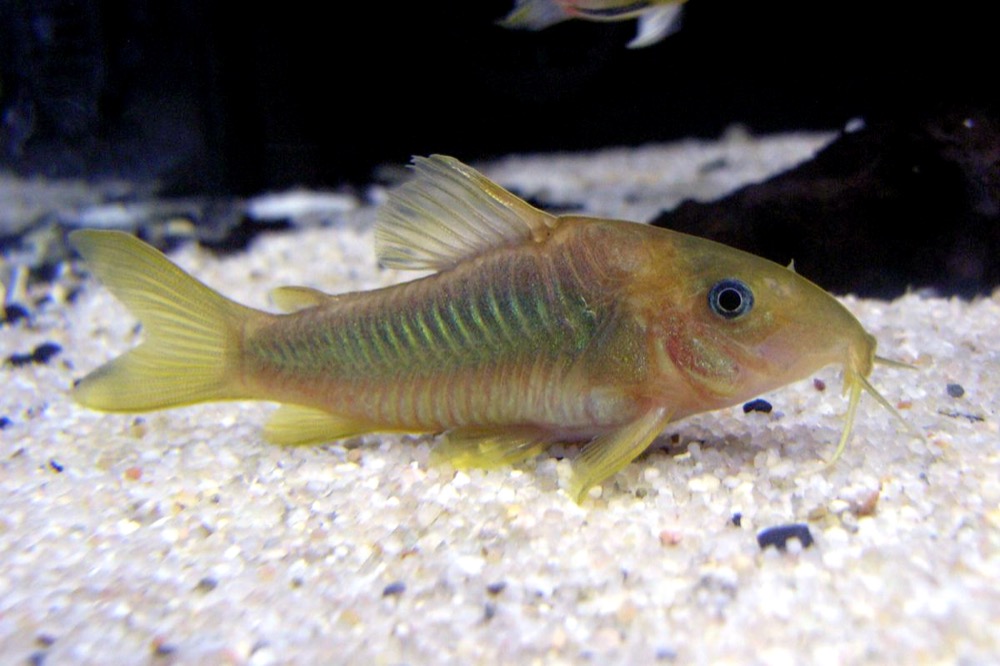
Corydoras Catfish (Cory)
Corydoras spp.
Care level
Beginner
Lifespan
5 to 10 years
Adult size
2.5 to 7 cm depending on species
Corydoras are small, armoured, bottom-dwelling catfish that bustle across the substrate on comical whiskered faces. They are peaceful, sociable, and endlessly endearing, and they help tidy uneaten food, though they must never be treated as mere clean-up crew. Many species are beginner-friendly and long-lived when kept in proper groups.
Housing & setup
Provide a minimum of about 60 to 75 litres with a smooth sand or rounded fine-gravel substrate, since sharp gravel injures and erodes their delicate barbels. They are schooling fish that need at least 6 of the same species. Use a gentle filter, plant the tank, and add hides and driftwood, keeping a lid in place.
Diet & feeding
Corys are bottom-feeding omnivores that need their own sinking food rather than just table scraps from above, so feed sinking pellets, wafers, and frozen bloodworm or blackworm. Make sure enough reaches the bottom, feeding after lights-out if faster fish grab everything first. Do not assume they will survive on leftovers, and avoid overfeeding.
Temperature, light & environment
Keep the water at 22 to 26 C, though some species prefer the cooler end, with pH 6.5 to 7.5 and soft to moderately hard water. The tank must be cycled with ammonia at 0 and nitrite at 0 and nitrate low. Dechlorinate tap water and change about 25 percent weekly. Corys are sensitive to dirty substrate, which erodes barbels, and to copper-based medications, so dose with care.
Company & handling
Corydoras are schooling, social catfish that must be kept in groups of at least 6 of the same species to feel secure. They are peaceful bottom dwellers that suit almost any calm community and spend their time foraging together across the substrate.
Enrichment & exercise
A soft sand bed lets them sift and forage naturally, while hides, caves, plants, driftwood, and gentle flow give them cover and interest. Scattering sinking food encourages their natural rooting behaviour.
Common health problems
Barbel erosion
Signs: Worn, shortened, or missing whiskers, sometimes with red inflammation.
Prevention: Use smooth sand or rounded substrate, keep the bottom clean, and maintain good water quality.
Ich (white spot)
Signs: White spots on body and fins, flashing, clamped fins.
Prevention: Quarantine new fish, avoid chilling, and dose medications cautiously as corys are sensitive.
Fin rot
Signs: Frayed or eroding fins.
Prevention: Keep water pristine and cycled and avoid crowding and injuries.
Ammonia poisoning (new tank syndrome)
Signs: Lethargy, gasping, red gills, and sitting listlessly on the bottom.
Prevention: Fully cycle the tank before stocking and test water regularly.
See a vet urgently if...
- !Worn down or missing barbels
- !Constant laboured gasping at the surface (note: brief occasional dashes up to gulp air are normal)
- !Lying listless and not foraging with the group
- !White spots or red patches on the body
- !Refusing food or sudden deaths
In Macau
Dechlorinate Macau tap water and use a smooth sand substrate to protect their barbels. Avoid copper-containing medications, as corys are sensitive to them. They are widely sold in local aquarium shops, and summer temperatures should be kept in check.
Corydoras can breathe air by darting to the surface, gulping a bubble, and absorbing oxygen through their gut, so an occasional quick dash upward is normal behaviour rather than a sign of distress.
Questions about your exotic pet?
Our team sees small mammals, birds, reptiles and fish. Book a wellness check or a species consult.
Book an exotic consultRelated care sheets
General guidance reviewed by the Royal Veterinary Center team. Not a substitute for a veterinary examination. Always confirm species-specific and legal requirements for Macau.