Fish & Aquatics
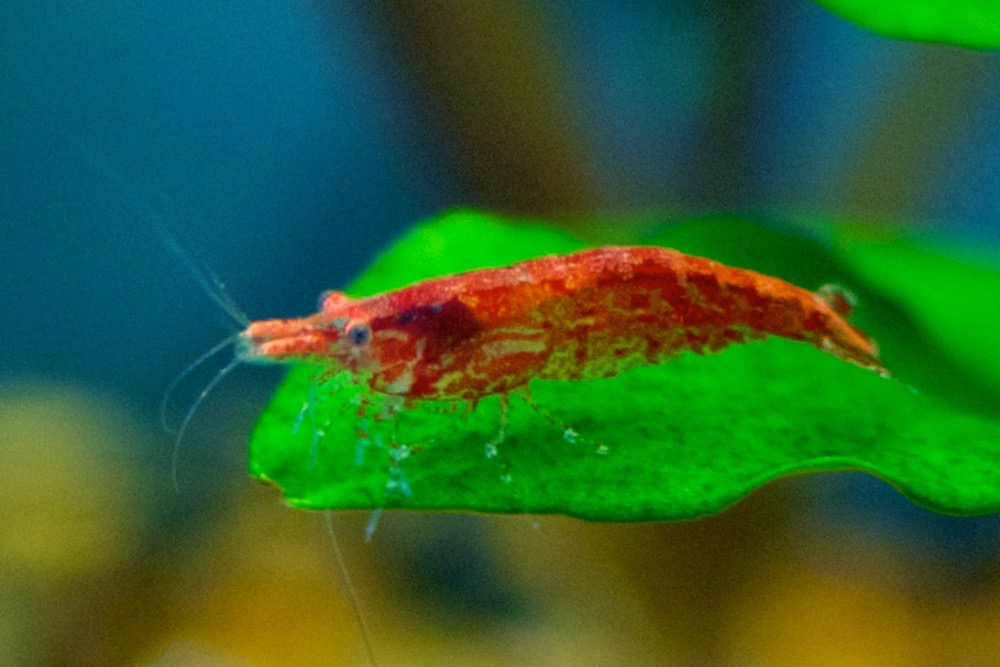
Cherry Shrimp
Neocaridina davidi
Care level
Beginner
Lifespan
1 to 2 years
Adult size
2.5 to 4 cm
Cherry shrimp are tiny, brightly coloured freshwater invertebrates that graze algae and biofilm all day long. They are peaceful, fascinating, and breed readily in a stable planted tank, making them a favourite of nano and aquascaping enthusiasts. They are beginner-friendly in a mature tank but are far more sensitive than fish to water swings and to copper.
Housing & setup
A stable, mature, well-planted tank of about 19 to 20 litres or more suits a colony. Use a gentle sponge filter, which will not suck up shrimp or their young, and provide moss, plants, driftwood, and botanicals that grow the biofilm they graze. A lid is optional but reduces escapes and evaporation.
Diet & feeding
Cherry shrimp mainly graze biofilm and algae, so a mature planted tank feeds them naturally. Supplement two or three times a week with a shrimp-specific food, blanched vegetables, or leaf litter in tiny amounts. Overfeeding is a leading cause of trouble, fouling the water and encouraging pests like hydra and planaria.
Temperature, light & environment
Keep the temperature at 20 to 26 C, with pH 6.5 to 8.0, GH 6 to 12, KH 3 to 8, and TDS around 150 to 250. Most important, the tank must be fully cycled, mature, and stable, with ammonia at 0 and nitrite at 0 and nitrate low, because shrimp react badly to swings. Critically, they are extremely sensitive to copper, which is present in many fish medications, some plant fertilisers, and tap water from older copper plumbing, and even traces can be fatal. Dechlorinate with a copper-free conditioner, and do small frequent water changes with temperature-matched water to avoid molting problems.
Company & handling
Cherry shrimp are peaceful colony animals that do best in a group of at least 10 and will happily breed to fill the tank. Keep them either in a species-only tank or with small, peaceful, non-predatory tankmates, since most fish will eat baby shrimp.
Enrichment & exercise
Moss, dense planting, driftwood, and leaf litter or botanicals maximise the biofilm they graze and give them cover to hide in while they are soft and vulnerable just after molting.
Common health problems
Copper poisoning
Signs: Sudden colony deaths, shrimp lying twitching or motionless after a water change, new plant, or medication.
Prevention: Never use copper-based medications, use a copper-free water conditioner, and avoid copper-contaminated tap water.
Failed molt (white ring of death)
Signs: A visible white ring at the mid-body and a shrimp unable to free itself from its old shell.
Prevention: Keep GH and mineral levels adequate for shell formation and avoid sudden parameter or temperature swings.
Bacterial or Vorticella infection
Signs: White fuzzy growths on the body or a cloudy, discoloured shell.
Prevention: Maintain excellent water quality, avoid overfeeding, and keep the tank clean.
Parameter-swing stress
Signs: Reduced grazing, hiding, pale colour, or die-off after a large or mismatched water change.
Prevention: Do small frequent water changes, match temperature and parameters, and keep conditions stable.
See a vet urgently if...
- !Shrimp lying on their side and not grazing
- !A white ring across the middle of the body (failed molt)
- !Sudden colony deaths after a water change, new plant, or medication
- !Shrimp unable to exit their molt
- !White fuzzy growths or a cloudy discoloured shell
In Macau
Dechlorinate Macau tap water and use a copper-free conditioner, and be cautious of copper leaching from older building plumbing, which is a real risk in dense urban housing. If you suffer unexplained losses, consider remineralised RO water. Keep the tank cool in summer, and source shrimp from local aquascaping and aquarium shops.
Cherry shrimp graze biofilm almost constantly, and a breeding female becomes berried, carrying and fanning her eggs beneath her tail until they hatch as fully formed miniature shrimp with no larval stage.
Questions about your exotic pet?
Our team sees small mammals, birds, reptiles and fish. Book a wellness check or a species consult.
Book an exotic consultRelated care sheets
General guidance reviewed by the Royal Veterinary Center team. Not a substitute for a veterinary examination. Always confirm species-specific and legal requirements for Macau.